

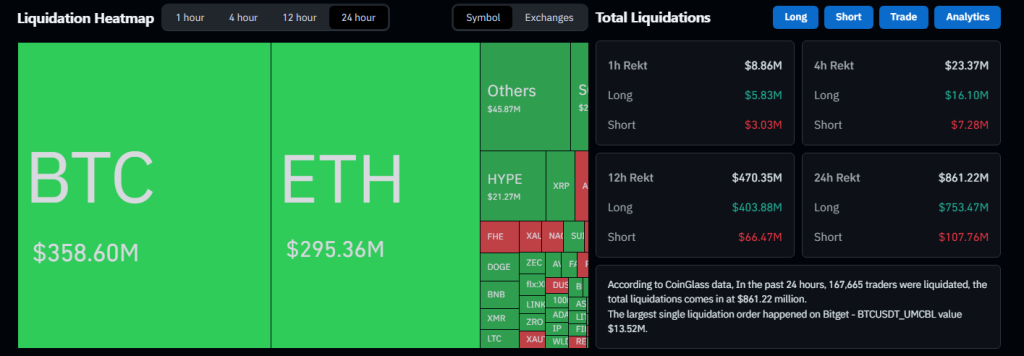
Bitcoin tumbled sharply this week and erased the gains it had made in 2026. Reports from CoinGlass show that over the past 24 hours, 167,513 traders were forced out of their positions, with total liquidations reaching $857 million, with most of those losses coming from long bets. The price slid below the key $88,000 area on major exchanges as traders were forced out of leveraged positions.
Liquidations And Quick Drop
According to CoinGlass and market trackers, the liquidations were concentrated in long positions, which amplified the fall and made the move faster than a simple sell-off would have been. Crypto market value fell by hundreds of millions over the same short span.
Markets Turned Risk-Averse As Tariff Threats Spread
Reports note that renewed tariff threats from US President Donald Trump toward some European countries set off a fresh “Sell America” trade, which pushed investors away from US assets and toward safer bets.
Stocks fell and the dollar weakened. At the same time, traders were watching big moves in Japan’s bond market, where yields jumped sharply, increasing pressure on global liquidity. Those bond moves are important because they can force carry trades to unwind, pulling money out of risk assets — including crypto.
The sell-off did not happen for only one reason. Reports point to a mix of political shocks, bond-market stress, and a wave of forced liquidations as the main drivers. As cash flowed into safe havens, gold surged to fresh highs while crypto lost ground. Many investors treated Bitcoin like a risky asset in this episode, selling it to cover losses or margin calls elsewhere.
Different trackers gave slightly different figures on total market losses and exact liquidations over 24 and 48 hours. That is normal when markets move fast and data is pulled from different exchanges and windows. Still, the broad picture was clear: a fast, leveraged unwind sent prices lower and erased the year’s gains for Bitcoin.
Markets Will Watch Liquidity And DiplomacyLooking ahead, investors will likely watch three things closely: moves in global bond markets, any escalation or de-escalation around the tariff threats tied to Greenland, and whether forced selling slows. If liquidity conditions calm, risk assets can recover more easily. If they keep tightening, the pressure on crypto and stocks could persist.
Featured image from Pexels, chart from TradingView