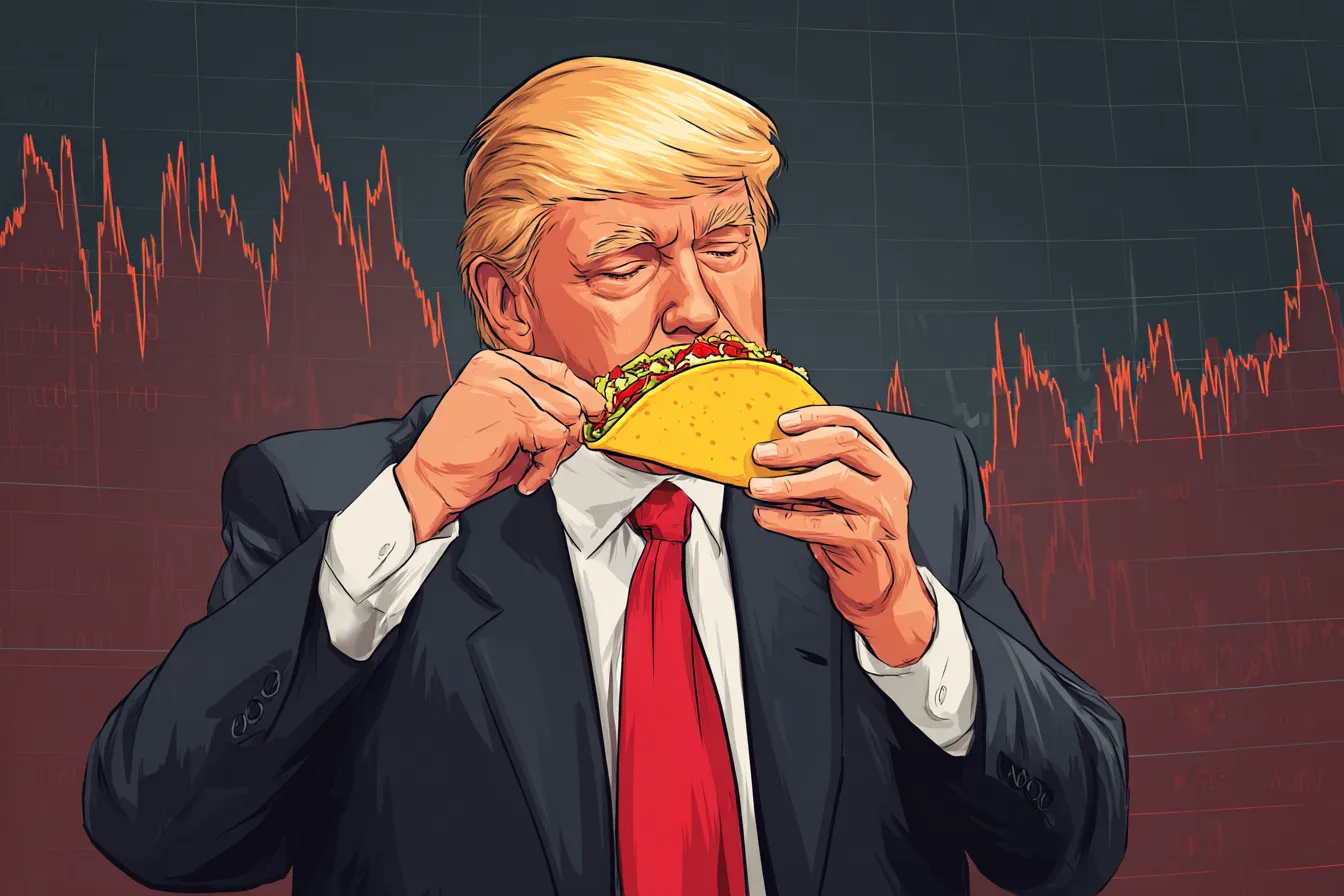
Bitcoin prices have surged past $78,000 as market participants show renewed appetite for risk, buoyed by a ceasefire that raises optimism in the cryptocurrency space.
The incredible resiliency of the OG token is evident as it resumes its upward path. But the real question now is whether Bitcoin can scale the 200-day moving average, which is within its reach.
Following President Trump's extension of the US-Iran ceasefire, which boosted confidence in the stock market and cryptocurrencies, the price of Bitcoin surged to surpass $78,000.
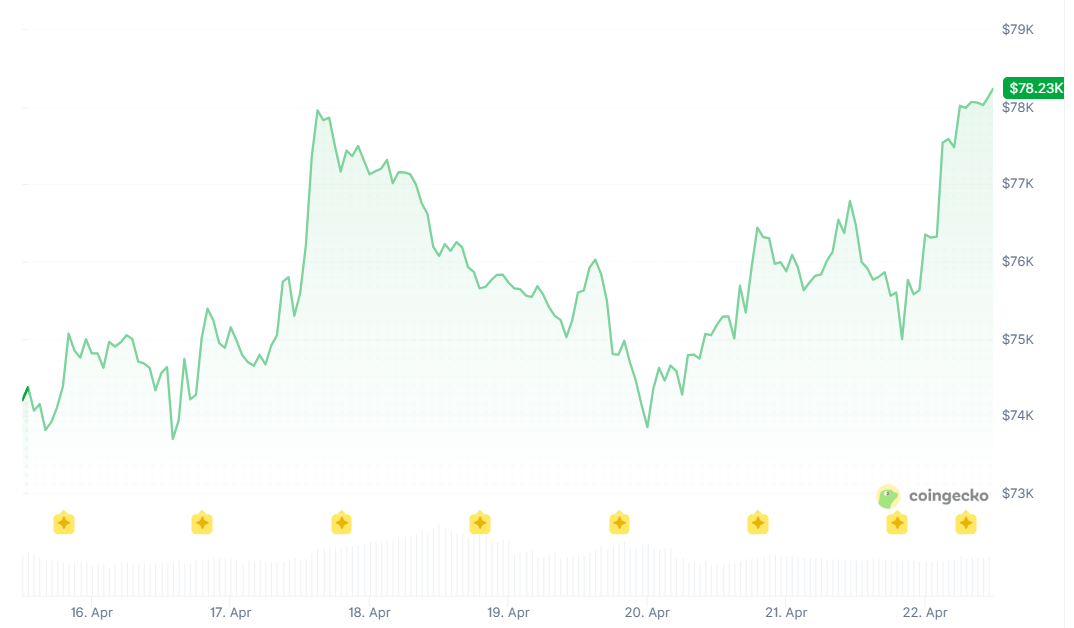
Trump's shift has once again propelled Bitcoin closer to its highest levels since Friday’s two-month peak around $78,300, indicating that market participants are still inclined to reallocate into risk assets as geopolitical tensions ease.
Not only did Ether see a gain of about 2.8%, but other digital assets followed suit. All digital assets, not just Bitcoin, seem to be benefiting from the upturn in mood.
At present, market players are keeping a careful eye on the 200-day moving average, which lies between $85,000 and $86,000. This average is a crucial indication of long-term trends. As invisible resistance in technical trading, moving averages help to clarify price changes.
According to TradingView, resistance around $80,000, where profit-taking has historically been focused, may be seen before we reach that mark. In order to break through major psychological barriers like this one, strong momentum and favourable macroeconomic conditions are usually necessary.
Around $72,000 is the support, as that's where buyers have traditionally come in during consolidations. Even if there is volatility, holding a position above it will keep the short-term bullish framework in place.
Digital Gold Amidst 'TACO'
Bitcoin has outperformed multiple traditional hedging tactics and shown durability during the Iran conflict.
An unanticipated shift in the narrative of safe-haven assets has been seen since late February, with Bitcoin surging over 15% and gold falling almost 10%.
Bitcoin is being seen by market participants in two ways: as an asset to be risked or as a hedge against macroeconomic uncertainty, according to the observed divergence between the crypto and gold.
The fact that it serves a dual purpose keeps it at the centre of debates on cross-asset placement.
The prevailing sentiment is essentially to dismiss negative developments while responding positively to favourable updates. If that trend continues, market participants will persist in probing elevated levels as long as geopolitical news remains favourable.
Investors are navigating the complexities of the current market landscape shaped by Trump's policies. Significant amounts of capital are moving based on what the US president announces.
In the latest round, Trump indicated that the extension was justified due to the significant internal divisions within Iran's government, noting that the US blockade would persist as discussions progress.
In market terminology, that represents a reduction in tensions with stipulations included. No matter what happens, he said, the standstill will remain until Tehran makes a proposal and talks end.
The war updates that arrive after the market closing are having a greater impact on the movements of the overnight futures. Before traders even have time to brew their coffee in the morning, a single policy statement has the potential to change their risk tolerance.
Market fluctuations induced by quick, fluctuating changes in US policies are highlighted by the "TACO" (Trump Always Chickens Out) trade.
Risk assets have been whipsawed, but cryptos have been the biggest beneficiary. This pattern creates quick trading opportunities during these specific, often temporary, policy periods.
TACO Timeline
Liberation Day on April 2, 2025: The announcement of global reciprocal tariffs led to significant declines in major indices and cryptocurrencies, as concerns about a potential trade war escalated.
TACO Tuesday on April 9, 2025: A 90-day tariff pause was declared following a weekend of heated discussions, leading to a significant and swift surge in crypto prices.
China Tariff Threat on October 10-11, 2025: Bitcoin dropped 8.4 percent and more than $16 billion worth of leveraged cryptocurrency holdings were lost after the threat of the possibility of imposing 100 percent tariffs on Chinese tech.
But the reaction was swift, with Bitcoin surging to a new all-time high later that month.
Greenland Annexation Threat in January 2026: Coincident with the customary trend of a dip before the weekend and potential rebounds, worries about Greenland and European tariffs caused bitcoin prices to fall.
Iran Deadline on April 8, 2026: The news of a ceasefire sparked a rapid and substantial relief rally, which in turn caused cryptocurrency values to rise sharply, reflecting President Trump's recent change in stance on the possibility of military action against Iran.
The features of the TACO trade are the threats and a retreat by the President.
Overnight or weekend social posts of threats have had a disproportionate impact on cryptocurrency markets like Ethereum and Bitcoin.
In many cases, a quick recovery from setbacks follows Trump's "softening" of the tone in crypto, which has been far more substantial than other traditional assets.
The volatility in the digital assets market has been lower compared to other assets during Trump's turbulent presidency so far.
For now, all eyes are on the high-stakes transit through the Strait of Hormuz, which is weighing on global energy markets and in turn across asset classes.